
The Dahomey cattle is a robust small cattle. The ancestors of this cattle came to the zoo of Antwerp (Belgium) around the turn of the century (1900). The descendants of these first African cattle were passed on to other European zoos. At Antwerp Zoo they were given the name after their area of origin, the former Kingdom of Dahomey. Today it belongs to Benin (West Africa). The often used breed name „European Dahomey dwarf cattle“ is therefore not correct.
Later, offspring of these Dahomey cattle came into private hands and enriched our breeding. They are therefore very uniform in their phenotype and genotype.
Special breed characteristics are their small body size, blue tongue and blue mucous membrane in the throat area, in cows the barely visible udders with very short teats, in bulls the short and relatively small scrotum, the long tail tassel, the short horns, in black Dahomeys the beautiful copper shine on the back and hind legs. They only come in black and gray colors.

Dahomey cattle are the smallest cattle in the world, measuring 80-100 cm. Centuries of natural selection in the dry savannas of West Africa caused this short stature and guaranteed survival. It produced a well-proportioned small cattle without any genetic defects. They may look like dwarves, but they aren’t. They do not carry a specific dwarf growth gene. The professional world should therefore not speak of a dwarf cattle, but of a small cattle.
Despite their African origin, they are robust and adaptable to heat and cold. In our latitudes, they are kept in stables with a run or in open stables with year-round access to the outdoors.

Was it initially the extraordinary short stature that interested zoos and private breeders in the animals; today it is their special characteristics as livestock.
Dahomeys are ideal for grazing paddocks or for grazing small areas and fallow land. When used in landscape maintenance, the small size is an advantage, since the relatively light animals (150 – 250 kg) cause hardly any damage when stepped on the surface. Trees, including fruit trees, are not damaged by bark peeling, as is the case with sheep and goats. Even with the horns, these trees are not damaged.

The Dahomey cattle get along particularly well with inferior pastures. If the grass is too high in protein, the animals should always have some hay available, even in summer. Despite their small body size, perhaps because of this, these cattle provide an exclusive, finely structured and dark meat with a very fine, noble, slightly hinted game taste. A real treat for connoisseurs and gourmets. It is low in fat and therefore ideal for health-conscious nutrition.
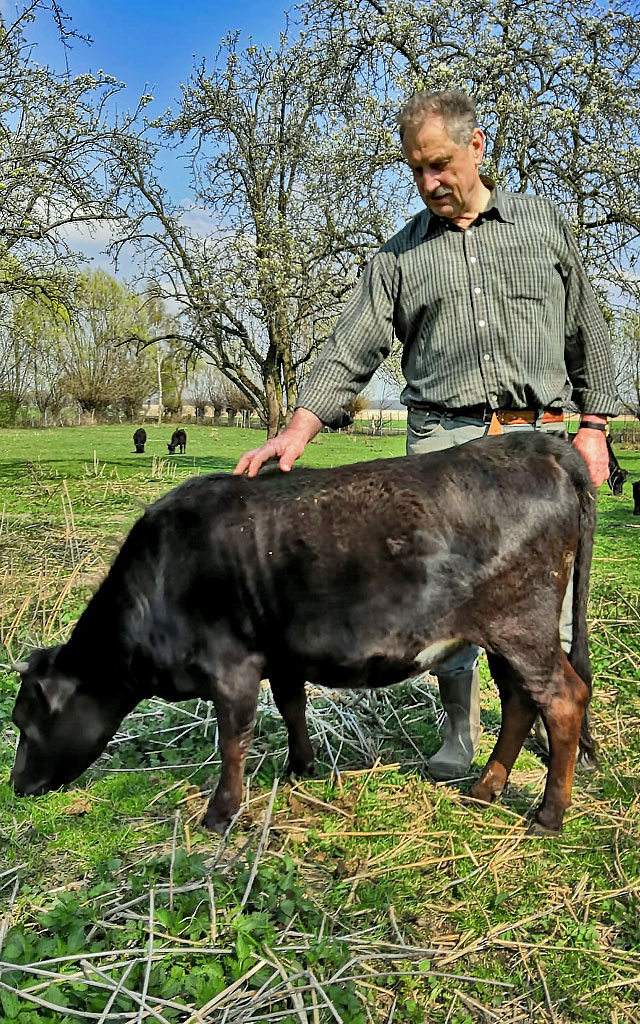
Probably because of their small size, these cattle develop a strong sense of belonging and a pronounced protective instinct. The herd sticks together in times of danger. The maternal instinct is also well developed. Annual calving into old age is not uncommon. Her ease of calving is particularly noteworthy. Coercion and violence causes them to flee and/or to attack and defend themselves, even to the greatest aggression. They are trusting towards people and can become tame with appropriate affection.
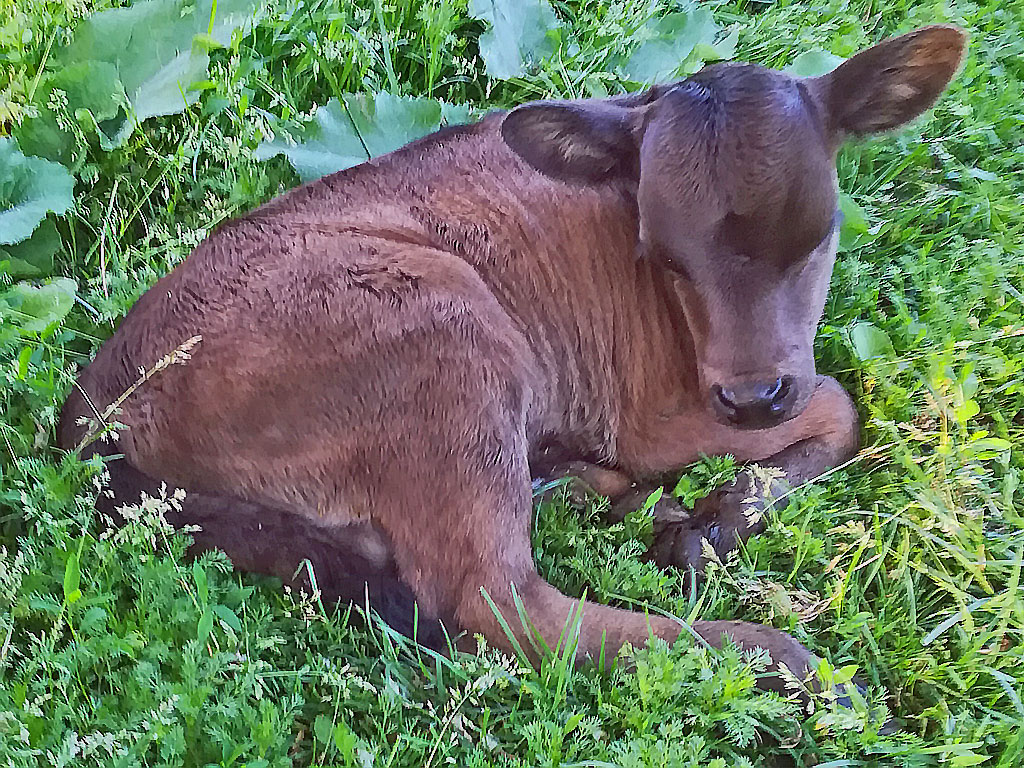
In order to maintain these excellent properties and quality of the Dahomey cattle, pure breeding without any crossbreeding with other breeds must be guaranteed.
The aim is to continue to breed the real, small, original type of Dahomey cattle and to preserve it in the same way as the animals that originally came from their African homeland to the zoos in Europe.
All breeders of the Dahomey breeding Dahomey Verband Deutschland e.V. face this task.